 Rings
Rings Bracelets
 Necklaces
 Earrings
 Pendants
 Buckles
 Belts
Belts Fetishes
 Bolo ties
 Stunning Pieces
 Moccasins
 Miscellaneous
 Decorations
 Rug
RugWolf
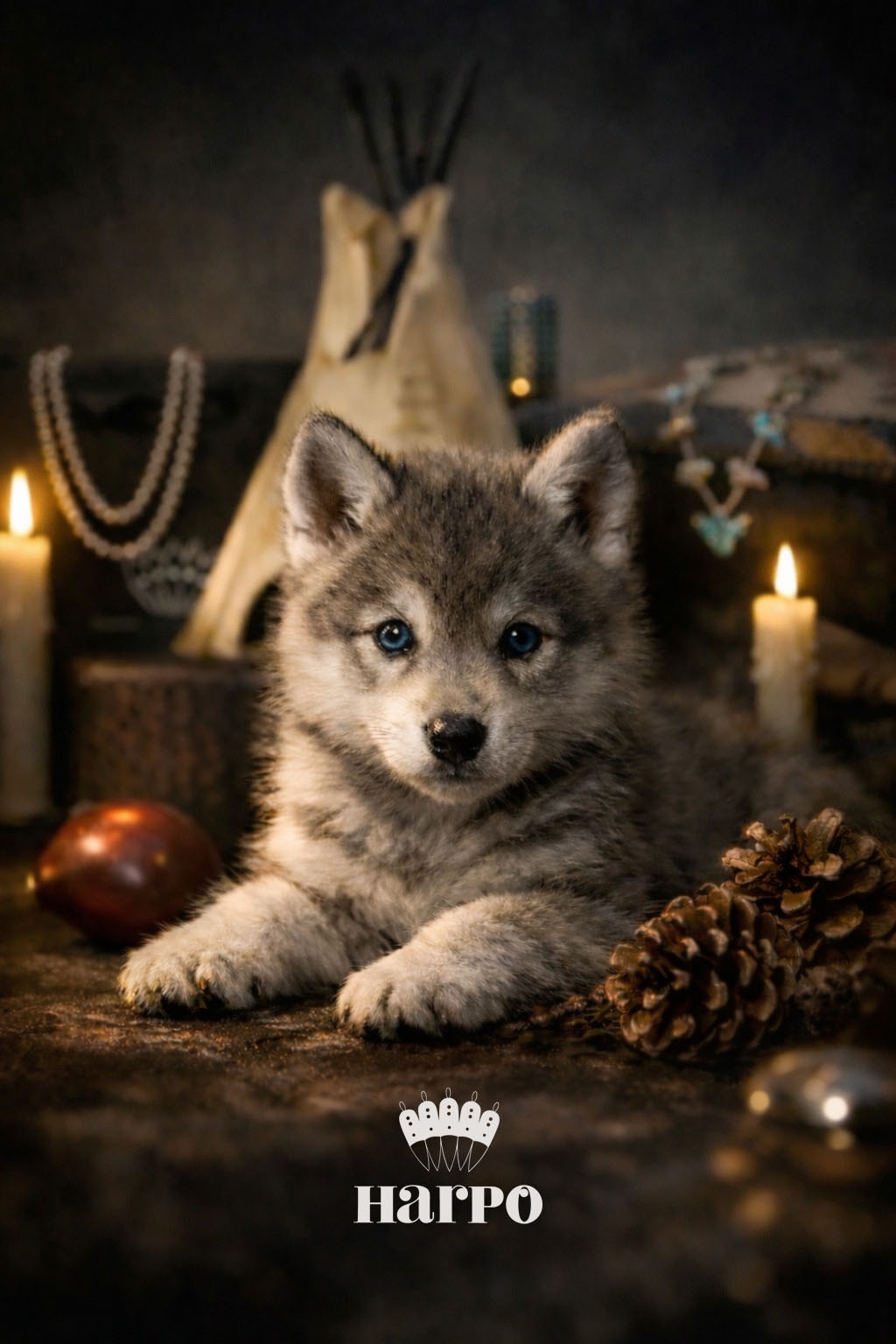
The wolf in Native American cultures
In many Native American cultures, the wolf occupies an important spiritual place. It is often seen as a symbol of courage, intelligence, loyalty, and guidance. Its pack lifestyle, based on cooperation and solidarity, reflects community values and the balance between the individual and the group.
In myths and legends, the wolf can be a protector, messenger, or guide, imparting knowledge about nature, the cycles of life, and the relationship between humans and their environment. As a totem animal, it is associated with instinct, observation, protection, and family values.
Thus, the wolf appears as a symbolic model of adaptation, respect for life, and collective harmony, embodying an idealized vision of the relationship between humanity, nature, and the spiritual world.
The words of the elders
Since the time when the earth was still young and men knew how to listen to the wind, the wolf has walked alongside humankind.
He is the one who knows the paths of the night and the secrets of the forest. It is said that he carries courage in his gaze, loyalty in his heart, and wisdom in his silent footsteps. He never walks alone: around him, the pack moves forward as one soul, each watching over the other, each finding their place in the living circle.
In ancient tales, the wolf is a messenger between worlds. He teaches men to observe the seasons, to respect the breath of the earth, to recognize that all life is linked to a common harmony, and to follow the inner path.
Thus, the wolf remains a mirror for the human heart: it speaks to us of balance, connection, respect, and harmony. And as long as its song echoes under the moon, the elders say that humans will never completely forget how to live with the earth and not against it.
What if your spirit animal was the wolf?
In reality, it reveals even more character.
Come see us, give us a call...
After all, it might be the call of the wolf.
