 Rings
Rings Bracelets
 Necklaces
 Earrings
 Pendants
 Buckles
 Belts
Belts Fetishes
 Bolo ties
 Stunning Pieces
 Moccasins
 Miscellaneous
 Decorations
 Rug
RugKachinas
At HARPO, we have always celebrated the beauty and depth of Native American craftsmanship. Each piece, each decoration, carries with it a story, a symbol, a tradition passed down with respect.
Hopi spirituality and the meaning of Kachinas
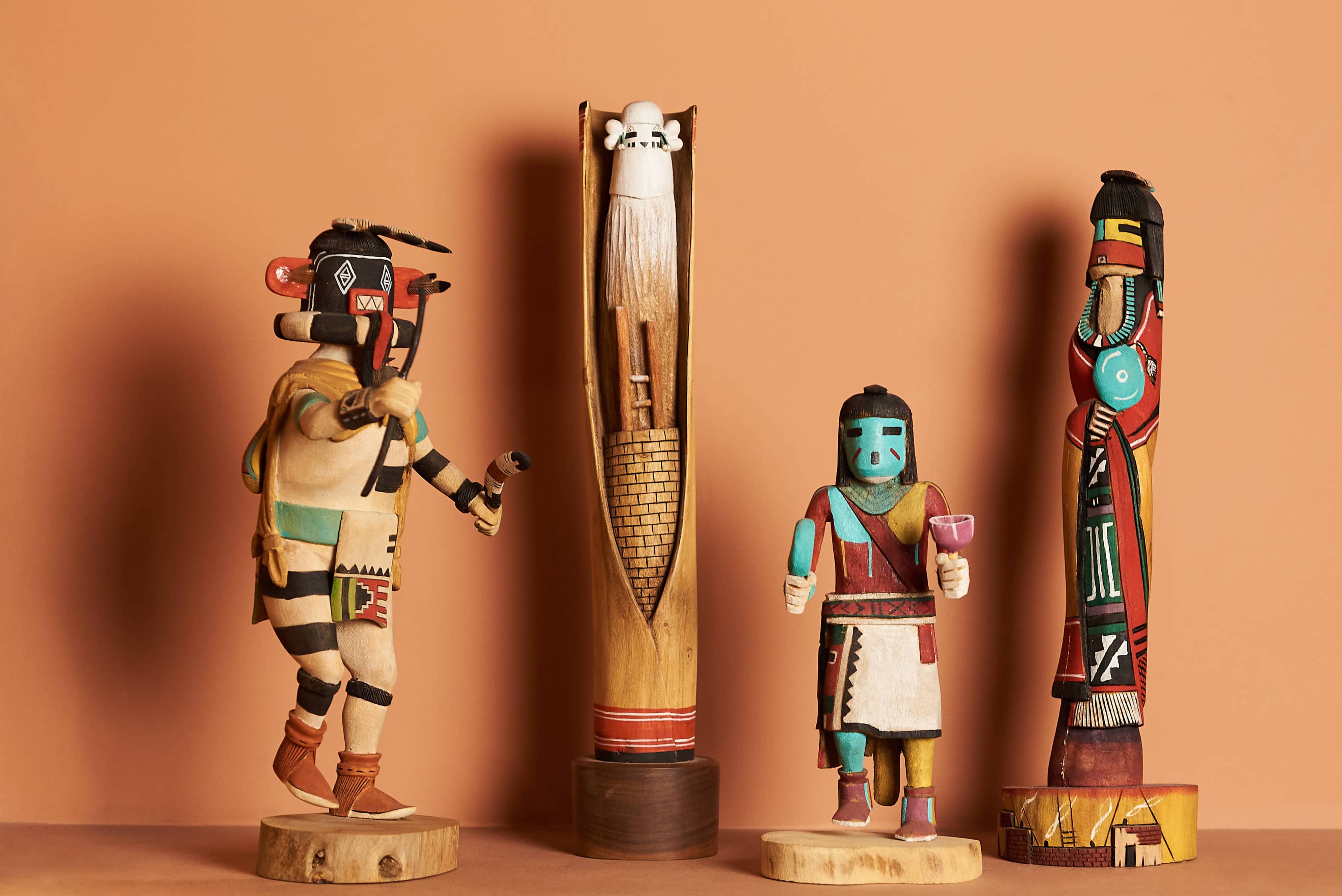
In Hopi spirituality, everything that exists has two dimensions: a visible form and a spiritual form.
The Kachinas embody this invisible presence: they are the spiritual manifestations of deities, beings that Native American peoples honor and whose teachings are passed down from generation to generation.
During ceremonies, Kachina dancers adorn themselves with costumes, masks, and feathers. These carefully chosen elements identify the Kachina they represent and convey the message they carry. Hopi tradition includes thousands of Kachinas, each with a unique role. Some watch over the community, others provide protection, guidance, or medicinal benefits. Together, they form a rich, vibrant symbolic universe deeply rooted in Native American culture.
Kachina ceremonies: Dance, rituals, and traditions
,_village_of_Shonghopavi,_Arizona-single_image.jpg)
picture: “KACHINA DANCE, c.1903 Hopi rain ceremony with kachina masks in the village of Shungopavi, Arizona. Stereographer, circa 1903.”
Kachina ceremonies mark the passage of time, from the depths of winter to the first warm breaths of spring. They accompany the awakening of the earth, mark the seasons, and remind us that the spirits are always watching over us. Each month brings its own ritual, dance, and message. In November, the initiation ritual symbolically opens the door to the spiritual world for the youngest members of the community.
Throughout the religious ceremonies, the Kachinas carry the prayers of humans. Native Americans pray for rain, abundant harvests, good health, and sufficient game. Friends of the deities, they bring gifts and food. They also teach good behavior and the consequences of bad behavior, reminding everyone of their place in the balance of the world.
When the ceremony begins, certain initiated members of the community become Kachinas. Only those who have received the necessary training and initiation can wear these sacred costumes made of skins, fabrics, and natural fibers, and wear the vibrantly colored masks. Feathers, necklaces, bracelets, bells, and instruments complete their outfits: nothing is decorative, everything has a function. A blue feather calls for rain, a red mask invokes the power of the sun, a black line on the face marks the boundary between the visible and the invisible. Every detail has a meaning, every color whispers a prayer.
Symbolisme et rôle des Kachinas dans la vie quotidienne
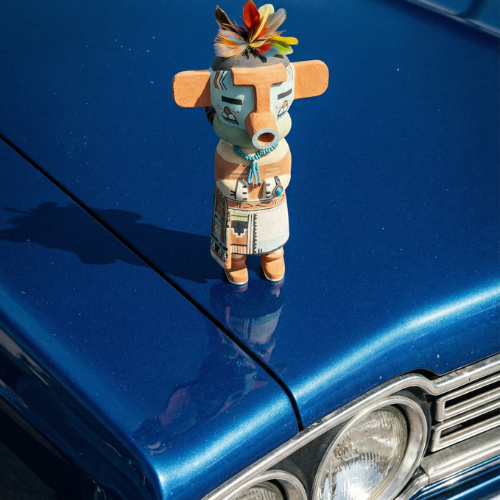
Sometimes, the Kachinas manifest themselves to the Hopi people in physical forms such as bison, eagles, or corn, and come to life through dances and songs during various ceremonies. These dances occupy a central place in the social and spiritual life of the tribe. They revitalize the spirit of the earth and preserve the life force of the people.
Did you know? The history and value of Kachina dolls
The Kachinas are messengers: they carry human prayers to the world of the gods. They are asked for rain, good harvests, health, protection, and abundant game. In return, they offer gifts, symbolic food, and remind people of the rules of good behavior and the consequences of careless conduct.
These rituals, essential to agricultural and spiritual life, form a veritable living calendar where time is measured not in dates, but in dances, songs, and colorful dance steps that connect humans to spirits.
In this suspended moment, the Kachinas come to life: the masks no longer hide faces, they reveal a world where humans and the invisible move forward together.
How to display and collect Kachinas
Today, these dolls have become a traditional art form highly sought after by collectors. They continue to convey profound values, reminding us of the importance of balance between humans and their environment, as well as the richness of spirituality in everyday life. Collectors not only preserve these works, but also contribute to the recognition and dissemination of a unique cultural heritage.
Kachina dolls for children: Hopi spiritual guides
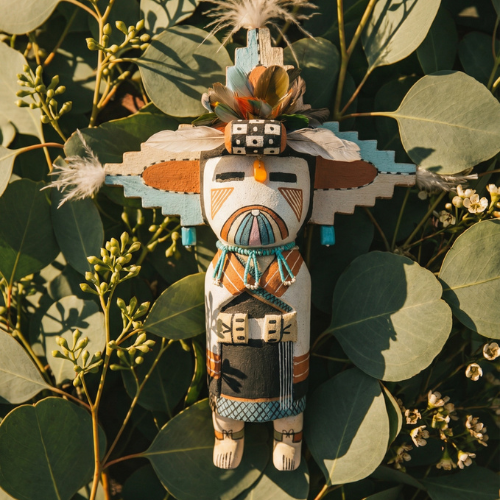
Beyond the magic of ceremonies, the Katchinas give children small dolls called “Tihu.” These figures are not mere toys, but guides: they help young children maintain a living connection with the spirits and recognize their messages. Passed down from generation to generation, they become true keys to culture for the tribes. Hung on the walls of homes, Katchina dolls watch silently, like protective presences.
Originally, they were made to teach children about the different Kachina spirits and their roles in daily life, nature, and spiritual traditions. Each doll represents a particular spirit and conveys messages of respect for nature, community cooperation, and the transmission of ancestral knowledge.
Visit HARPO and discover the Kachinas in our store.
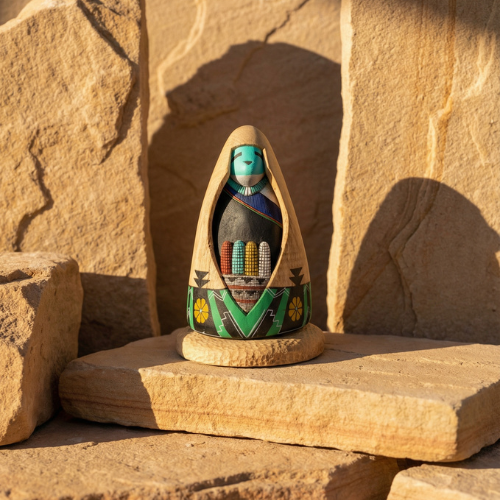
At HARPO, each little Kachina doll is a true miniature work of art. These figurines, handcrafted by Native American artists, embody spirits, legends, and symbols of Native culture with astonishing precision and care. Every detail—painting, engraving, or inlaying of natural materials—reflects the artist's talent and sensitivity, while telling a unique story.
These dolls are not just decorative: they are carriers of meaning and tradition. Some represent spirits of rain, fertility, or prosperity, while others celebrate animals or mythical figures, but all captivate with their finesse and authenticity.
Displayed on a shelf, in a glass case, or given as a gift, HARPO Kachina dolls bring a touch of culture and poetry to your everyday life. Each piece is a little treasure that we love to look at, talk about, and share.
Come and meet us in our store to discover these treasures in person, or let yourself be enchanted by our many Katchina figures, which can be viewed on our website and in the Harpo store.
